
Free shipping on orders of €50 or more


"Olive oil that not only tastes good
but also does good."
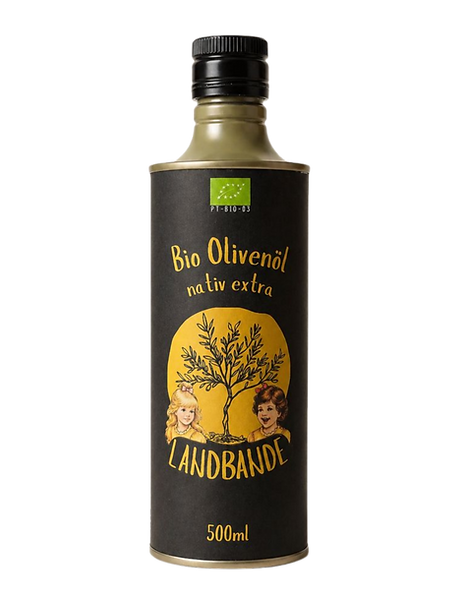
Our certified organic olive oil comes from traditional olive groves in northern Portugal.
The olives grow there under ideal climatic conditions and are carefully harvested and gently processed.
This results in a high-quality olive oil with a fresh aroma, natural fruitiness and a balanced taste.
Organic certified olive oil

Acidity of 0.4%
Cold extracted below 27 °C
Rich in oligophenols,
without chemical additives
The magic of the location
The olive groves are situated on fertile soils in the higher elevations of northern Portugal. There, the trees benefit from the interplay of intense sunshine and cool night air.
This unique microclimate produces olives with a particularly aromatic character. Unlike industrial production systems, we focus on an environment where nature can thrive – mixed crops instead of monocultures and natural diversity instead of chemical intervention.
We work exclusively with certified organic and sustainably managed farms that operate without chemical fertilizers and pesticides. Our oil mill adheres to strict standards to ensure that the organic olive oils never come into contact with conventional oils.
From tree to oil: The path to perfection
The olives are usually harvested in early November, as soon as they reach optimal ripeness. Unlike mass production, where overripe olives are preferred, we focus on fruit that can develop its best aroma. Lower yield, but more flavor and higher nutritional value. A traditional process that protects the trees and preserves the quality of the fruit. Within a few hours, the olives reach the mill – a crucial factor for taste and quality. The faster the processing takes place after harvesting, the better the aroma, fruitiness, and valuable nutrients are preserved.
Cold extraction takes place at a maximum of 27 °C – this preserves aromas and valuable ingredients.
Modern extraction methods ensure that oxidation is avoided and the quality of the oil is preserved. The result is an olive oil with a complex flavor and balanced texture.


Taste and quality
Landbande's organic extra virgin olive oil combines the characteristic qualities of the traditional Portuguese olive varieties Cobrançosa, Verdeal Transmontana, and Galega. Its complex aroma profile unfolds fresh notes of green almonds, tomato leaf, wild herbs, and freshly cut grass, accompanied by a delicate fruitiness. On the palate, the oil is characterful and perfectly balanced, with a pleasant bitterness and a subtly peppery finish – a hallmark of its natural richness in valuable polyphenols such as oleuropein and oleocanthal.
These secondary plant compounds are primarily found in early harvested olives and are considered an important quality indicator for high-quality organic extra virgin olive oil.
The lower the acidity, the fresher the olives and the gentler the processing. Our olive oil, with an acidity of approximately 0.4%, is of particularly high quality and stands out significantly from other olive oils, which typically have an acidity level above 0.8%. The result: a harmonious flavor that delights the palate – and a high content of valuable antioxidants that protect your cells.
With 70% unsaturated fatty acids, anti-inflammatory plant compounds, a rich nutrient profile and low acidity, Landbande olive oil stands for:
-
A delicate, mild aroma
-
Greater stability and longer freshness
-
Particularly gentle effect on the stomach and digestion
-
A plus for a conscious diet
An underrated olive oil country
Portugal is often overshadowed by the more famous olive oil-producing countries of Europe. However, international competitions and current industry reports show that Portuguese producers regularly receive top quality awards.
Many family-run farms continue to rely on traditional cultivation methods, careful harvesting, and rapid processing of the olives. It is precisely this combination that makes Portugal a true insider tip for many olive oil connoisseurs.
We want to be transparent about what we pay attention to. That's why we've linked selected external sources about olive oil, quality, storage, and sustainable agriculture.
Storage and shelf life
To preserve its aroma and quality, our olive oil is stored in an airtight, light-protected environment. Oxygen, light, and heat can cause olive oil to oxidize, impairing its aroma and freshness. It is stored in stainless steel tanks under controlled conditions until it is bottled.
Olive oil should also be stored at home in a cool, dark place, tightly sealed. Under optimal conditions, high-quality extra virgin olive oil typically remains usable for 18 to 24 months without losing its characteristic aromas. Checking the best-before date provides a good guideline. Once opened, use promptly.

A drop of oil, a little bit of the future
Our organic olive oil stands for enjoyment, origin, and responsible agriculture. The olives come from traditional olive groves that have been cultivated for generations.
With every bottle you buy, you support sustainable agriculture in Portugal. A portion of the proceeds goes towards planting new olive trees. We use 100% of donations for planting young trees. These new trees promote biodiversity, protect the soil, and ensure sustainable production for future generations.
In this way, we are all contributing to ensuring that Portuguese olive groves will continue to be cultivated in the future and that high-quality olive oils can be produced.
Experience the uniqueness of our organic olive oil and become part of a movement that combines enjoyment and sustainability.
The production of our high-quality organic olive oil
From olive tree to bottle – this is how our organic olive oil is produced:
Gentle, natural and without chemical additives!
1.
Quality check & cleaning
After harvesting, the olives are carefully inspected. Only fruits that meet the hygienic and sensory requirements are processed. They are then cleaned of coarse impurities and thoroughly washed under running water.
2.
Grinding to make olive paste
The cleaned olives are crushed in a stainless steel hammer mill. The result is a homogeneous olive paste. This mechanical crushing is the first step in oil extraction and is carried out without any chemical additives.
3.
Stirrer & temperature control (Malaxation)
The olive paste is slowly stirred in a machine called a malaxeur. The aim is to combine the oil droplets so they can be separated more easily later. The temperature is kept strictly below 27°C – a requirement for using the terms "cold-pressed" or "extra virgin" and for preserving aroma, polyphenols, and nutrients.
4.
Centrifugation & separation of components
In a horizontal centrifuge (decanter), the olive paste is mechanically separated into oil, fruit water and solid components.
5.
Fine clarification & decanting
In further centrifuges and by sieving, the so-called oil must – i.e., the crude oil – is freed from remaining water and solid particles. This purely mechanical clarification ensures a stable, pure end product without additives or filtration.